Unveiling the Media's Intentions Ahead of the Morocco-France Summit
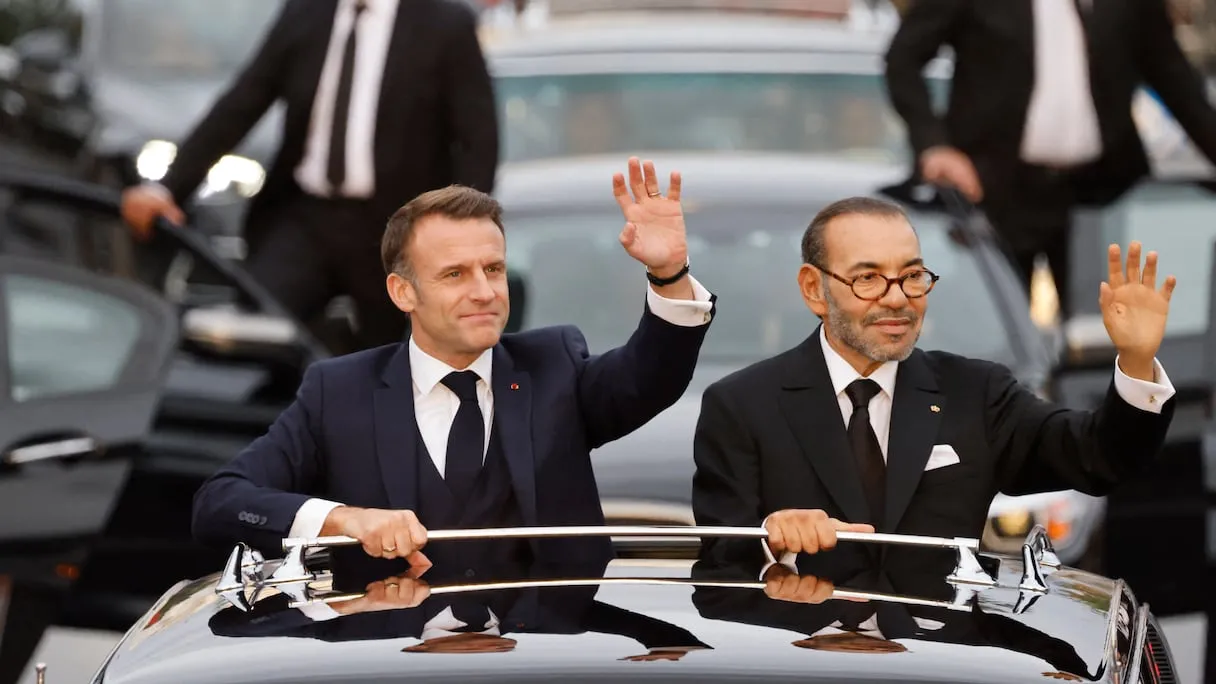
As the 15th intergovernmental summit between Morocco and France approaches, scheduled for July 16 in Rabat, a surge of critical media publications targeting the Kingdom has emerged almost simultaneously. This occurrence is neither coincidental nor trivial; rather, it aligns with a well-established pattern where each phase of rapprochement between Rabat and Paris triggers a concerted campaign aimed at undermining the bilateral relationship. The intent behind these media offensives is to sow suspicion and disrupt the strategic projects being developed between the two nations.
Behind this media frenzy lie the interests of certain factions within the French deep state, who remain skeptical about the emergence of an equal partnership between Paris and Rabat. For these influential networks, which cling to outdated geopolitical balances and perspectives, every advancement in the Franco-Moroccan partnership is seen as a challenge to their vested interests. Consequently, there is a persistent effort to fuel controversy, amplify hostile narratives, and weaken, through various media platforms, a cooperative dynamic that is gradually slipping from their control.
The timing of this campaign is particularly revealing, coinciding precisely with the two countries' expressed desire to elevate their partnership in areas such as security, defense, investment, energy, and economic cooperation. The High-Level Meeting was marked by the signing of several agreements and the announcement of significant projects, especially in the energy sector. The goal is clear: to muddle this diplomatic sequence, erode trust between Rabat and Paris, and create the impression that Morocco is an unreliable partner, even as France reaffirms the opposite.
Contradictions and Media Narratives: A Closer Examination
This media offensive is in stark contrast to the statements made by French Prime Minister Sébastien Lecornu, who publicly highlighted the convergence of interests between France and Morocco, particularly in terms of security, combating terrorism, and cooperation in Africa. He reiterated France's commitment to strengthening the bilateral relationship and giving it a new dimension. This dissonance is striking; on one hand, the French state acknowledges Morocco's status as a key strategic and security partner, while on the other, certain French media outlets propagate an information offensive that seems to align suspiciously with the agendas of those looking to undermine the Morocco-France relationship.
This discrepancy raises important questions about the editorial line adopted by certain French media regarding Morocco. Under the guise of investigation, some publications disproportionately feature anonymous testimonies, unverifiable accounts, and interpretations that extend far beyond the information presented to the public. The increasing significance of energy and gas in regional power dynamics adds a layer of complexity, raising concerns about the interests that may influence these media narratives. A pattern of speculative claims, protected sources, and sensational conclusions does not equate to the establishment of truth.
Notably, organizations like _Forbidden Stories_ and _Le Monde_ exemplify this trend. The consortium claims to expose the inner workings of a Moroccan surveillance system, relying heavily on the statements of an individual concealing his identity under the pseudonym "Safir." This unnamed source becomes a central figure in their narrative, with assertions that his testimony is corroborated by other sources and internal documents. However, what transpires is the transformation of a contentious story into an indisputable fact, constructing a sweeping accusation against the Moroccan state based solely on anonymous testimony.
Serious journalism necessitates critical scrutiny and balanced reporting, not merely accumulating claims that all point in the same direction and presenting their repetition as evidence. The background of "Safir" should have warranted heightened caution. This former agent reportedly did not leave the Moroccan administration under the heroic circumstances portrayed; rather, he was dismissed and subsequently relocated to France amid a conflictual context. This fact is crucial, as it can directly influence his motivations, the objectivity of his testimony, and, consequently, its credibility.
The portrayal of this individual as a brave whistleblower revealing state secrets is a carefully constructed narrative. _Forbidden Stories_, for instance, does not genuinely challenge its source's credibility; instead, it provides a platform, adopts the narrative, and uses it as the backbone for a pre-prepared accusation. The consortium cannot expect the public to blindly trust someone whose identity is concealed and whose background is not thoroughly examined while presenting claims as validated by other largely invisible sources. Investigative journalism should incorporate both contradiction and demonstration; the legitimate protection of a source should not serve as a means to shield that source from critical evaluation.
This discussion is not an argument against press freedom or the right to investigate Morocco; rather, it is a denunciation of the militant use of investigation when it abandons rigor, selectively highlights elements that support a thesis, and transforms allegations into verdicts. The repetition of such offensives, particularly as Morocco strengthens its ties with partners, can no longer be dismissed as mere coincidence. Specific networks within the French deep state are engaged in a genuine influence war aimed at hindering the strategic rapprochement between Rabat and Paris. They seek to compensate for their failures by creating a hostile informational environment regarding Morocco. Some French editorial offices—whether due to ideology, complacency, or financial interests—ultimately play a role in facilitating this strategy.
Geopolitical issues are no longer confined to diplomatic channels; they are also contested within newsrooms, on digital platforms, and through investigations designed to impose a narrative even before establishing the facts. As Morocco approaches each strategic advancement, the same tactics resurface, the same channels mobilize, and the same accusations are recycled. Once again, the maneuver is blatant: to attempt to overshadow the historic rapprochement between Rabat and Paris with the noise of a hostile media campaign. However, this tactic reveals the impotence of these influence circles, which, unable to halt Morocco's progress, desperately attempt to tarnish each of its advancements.
As reported by barlamane.com.